
Key Takeaways
A cleaning tarp only catches water; it doesn't clean anything. If you buy one, pick the size that fits your aircon.
Sprays and foam help with dust and smells on the front of the coil, but they can't reach the blower wheel or the drain tray.
Even if the can says "no rinse", rinse with clean water anyway.
If your aircon smells musty, drips, or hasn't had a full clean in a long time, a technician's clean covers far more.
Table of Contents
What an aircon cleaning tarp does
How to choose the right tarp for your aircon
What aircon cleaning spray and foam can and can't do
Is no-rinse foam any good?
Using spray or foam safely
Buy and DIY, or book a technician?
Post an aircon cleaning task on gigit
1. What an aircon cleaning tarp does
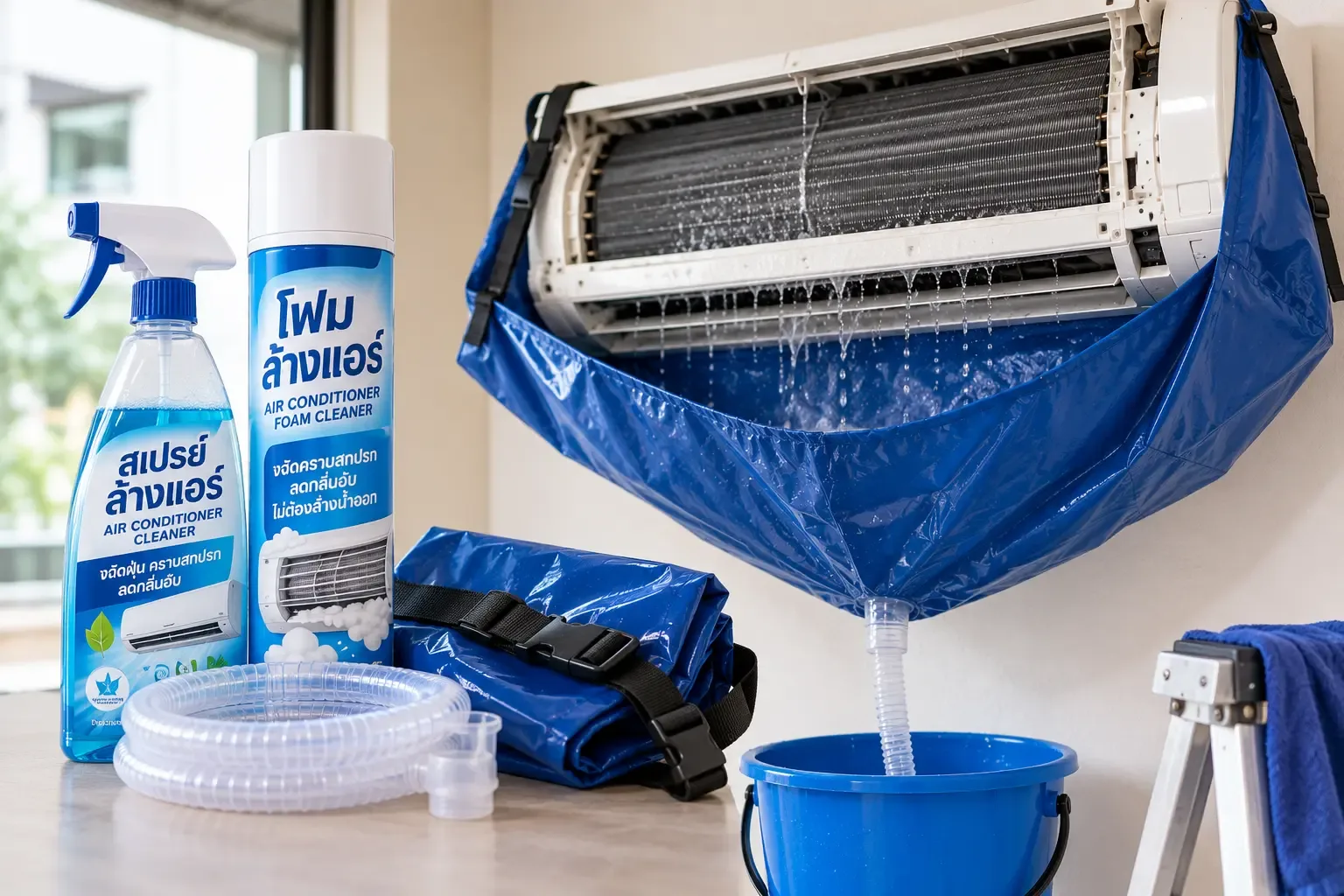
An aircon cleaning tarp is a waterproof, funnel-shaped sheet that hangs under your indoor unit, with a hose at the bottom running into a bucket. When the cooling coil is rinsed (the coil is the panel of thin metal fins behind the filter), the dirty water runs into the bucket instead of down your wall, floor or furniture.
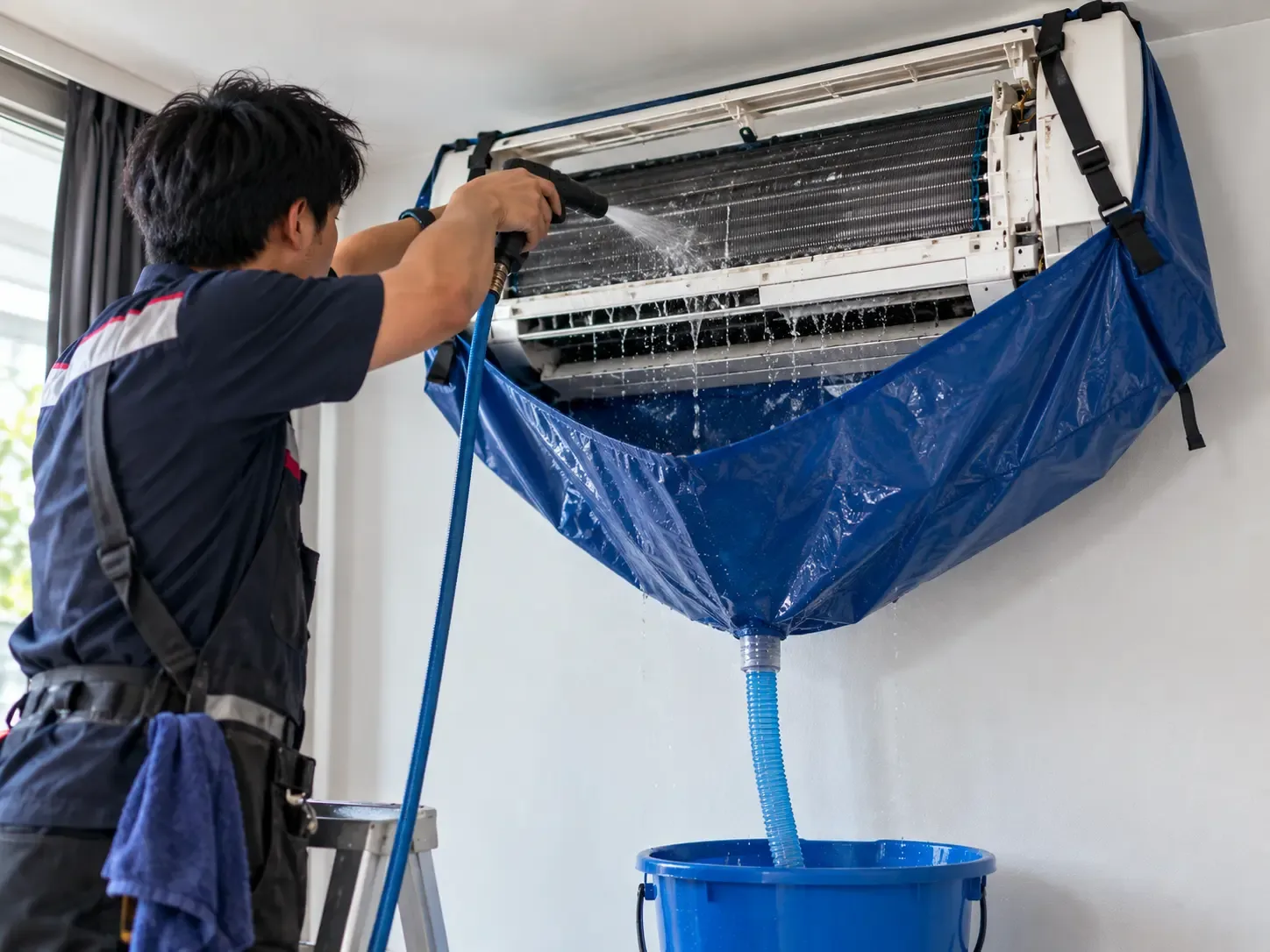
The tarp doesn't clean anything; its only job is catching water. If you only wash the filter, you don't need one, because the filter comes out and can be rinsed at the tap. A tarp earns its place when you regularly spray water or foam on the coil.
If you mostly hire someone, there's no need to buy one, because a tarp or drain bag is standard kit for an aircon cleaning technician. Download the gigit mobile app and post an aircon cleaning task. It only takes 2 minutes, and you'll receive offers from verified 5-star professionals in your local area.
2. How to choose the right tarp for your aircon
Start with your aircon's size in BTU. A tarp that's too small leaves gaps for water to escape at the sides, and one that's too big sags and is hard to fasten. Based on 2026 market data, the common sizes are:
Tarp size | Suits |
|---|---|
1.5 x 2 m | Wall units, 9,000–18,000 BTU |
2 x 3 m | Wall units, 18,000–24,000 BTU |
3 x 4 m | 4-way cassette and larger units |
Beyond size, look at three things:
Material. Coated nylon is light and folds away easily, which suits home use. PVC is thicker and tougher but heavier.
Drain hose. It should be long enough to reach a bucket on the floor, so water doesn't pool until the tarp sags.
Straps. Adjustable and strong enough to hold the weight of the water running in.
A 4-way (cassette) aircon cleaning tarp is made for ceiling-mounted units. These are fitted high and the front panel has to come off, so cleaning them is usually a technician's job.
3. What aircon cleaning spray and foam can and can't do
The foam cleaning sprays sold in cans are made for the front of the cooling coil. Foam cleaners such as 3M's are made to loosen dust and stale smells on the coil face. They clean the surface of the coil, not the inside of the unit.
Daikin's operation manual says cleaning internal parts is work for a qualified service person, and that the wrong detergent or cleaning method can damage plastic parts or cause water leaks. So use spray or foam only on the part of the coil you can see once the filter is out, and leave everything deeper to an aircon cleaning technician.
4. Is no-rinse foam any good?
You can use it, but rinse with clean water afterwards anyway. No-rinse aircon cleaning foam is sold on the idea that it melts and drains into the drain tray by itself, which is convenient. But the dust it loosens has to go somewhere, and without a rinse some of it can stay between the fins and collect in the drain tray.
Rinsing after the cleaner is normal practice. The DIY method Thai PBS presented, with input from a refrigeration engineering lecturer at King Mongkut's University of Technology Thonburi, also follows the cleaner with clean water. That's why you still need the tarp, even with no-rinse foam.
Is aircon cleaning spray any good, then? It's useful for keeping the coil face cleaner and fresher-smelling between full cleans. It isn't a replacement for cleaning the whole unit.
5. Using spray or foam safely
An aircon is an electrical appliance with a circuit board inside, so power and water matter most.
Switch off the aircon breaker first, not just the remote. Daikin's manual says to stop the unit and turn off all power before any cleaning.
Keep water and foam off the circuit board, which usually sits at one side of the unit, as Midea's DIY cleaning guide advises.
No high-pressure water. The coil fins are thin and bend easily. A spray bottle or low-pressure nozzle is enough.
Check the warranty terms if the unit is still covered. Some brands require an authorised technician.
The filter-and-front-panel steps you can do yourself are covered in how to clean your aircon at home.
6. Buy and DIY, or book a technician?
If the goal is keeping the coil face clean between services, buying these products makes sense. If the goal is fixing a musty smell, dripping or weak cooling, they don't reach the cause.
Product | Helps with | Can't reach | Watch out for | Verdict |
|---|---|---|---|---|
Cleaning tarp | Keeps water off your walls and floor | Doesn't clean anything itself | Wrong size lets water escape | Buy it if you clean the coil face yourself regularly |
Spray or foam | Dust and smells on the coil face | Blower wheel, drain tray | Breaker off, rinse after, keep off the circuit board | Fine between full cleans |
No-rinse foam | More convenient | Same as other foam | Residue left between fins | Fine, but rinse with clean water anyway |
If the smell stays after washing the filter, water drips, airflow is weak, or the unit is well past its cleaning interval, a technician's clean goes straight to the cause. The technician will clean the whole unit, not just the part a can of foam covers. If the unit is very dirty, they may suggest a full take-apart clean instead.
See how often you should clean your aircon, and check aircon cleaning prices.
7. Post an aircon cleaning task on gigit
Sprays and foam keep the coil face tidy between services, but a full clean is what deals with smells, drips and weak airflow. The technician will bring their own tarp and equipment, rinse the whole coil properly, and clean the blower wheel and drain tray that products can't reach. It only takes 2 minutes to post an aircon cleaning task on gigit: set your budget (or leave it open to offers), and choose from the offers local gigit heroes send. You pay through gigit's Safe Payment System, backed by Kasikorn Bank.