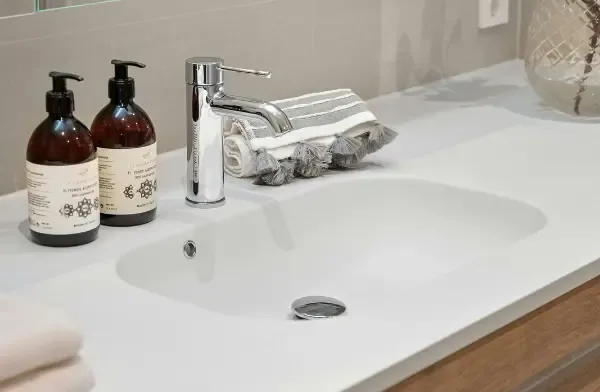

Key takeaways
A jug of water down the open plughole tells you in a minute whether it's the stopper or the pipe.
Most stoppers unscrew by hand, and the pipe under the sink comes off with a bowl and a spanner.
Still slow after that, or blocking again every few weeks? The problem is in the wall pipe.
Table of contents
Find the blockage in three steps
Cleaning a stopper that sticks or won't open
Cleaning the pipe under the sink
When it's blocked inside the wall
1. Find the blockage in three steps
Water leaves your sink through the stopper, then the U-shaped pipe underneath, then a pipe that disappears into the wall. One of those three is holding things up. If you think hair blocking the drain and soap scum are the cause, our guide on how to clear a blocked bathroom drain covers that.
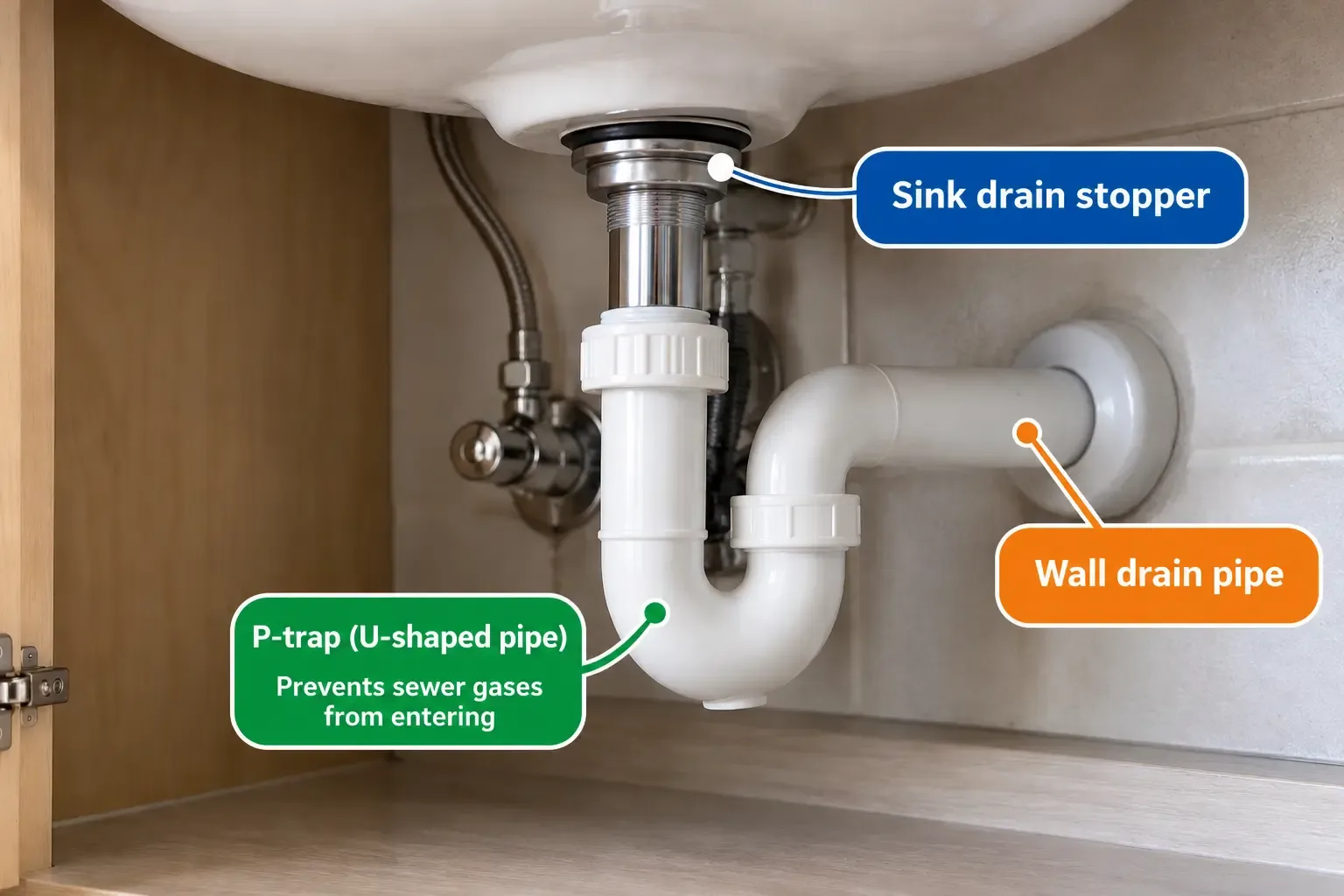
Here's how to fix a blocked bathroom sink, starting with the easiest check:
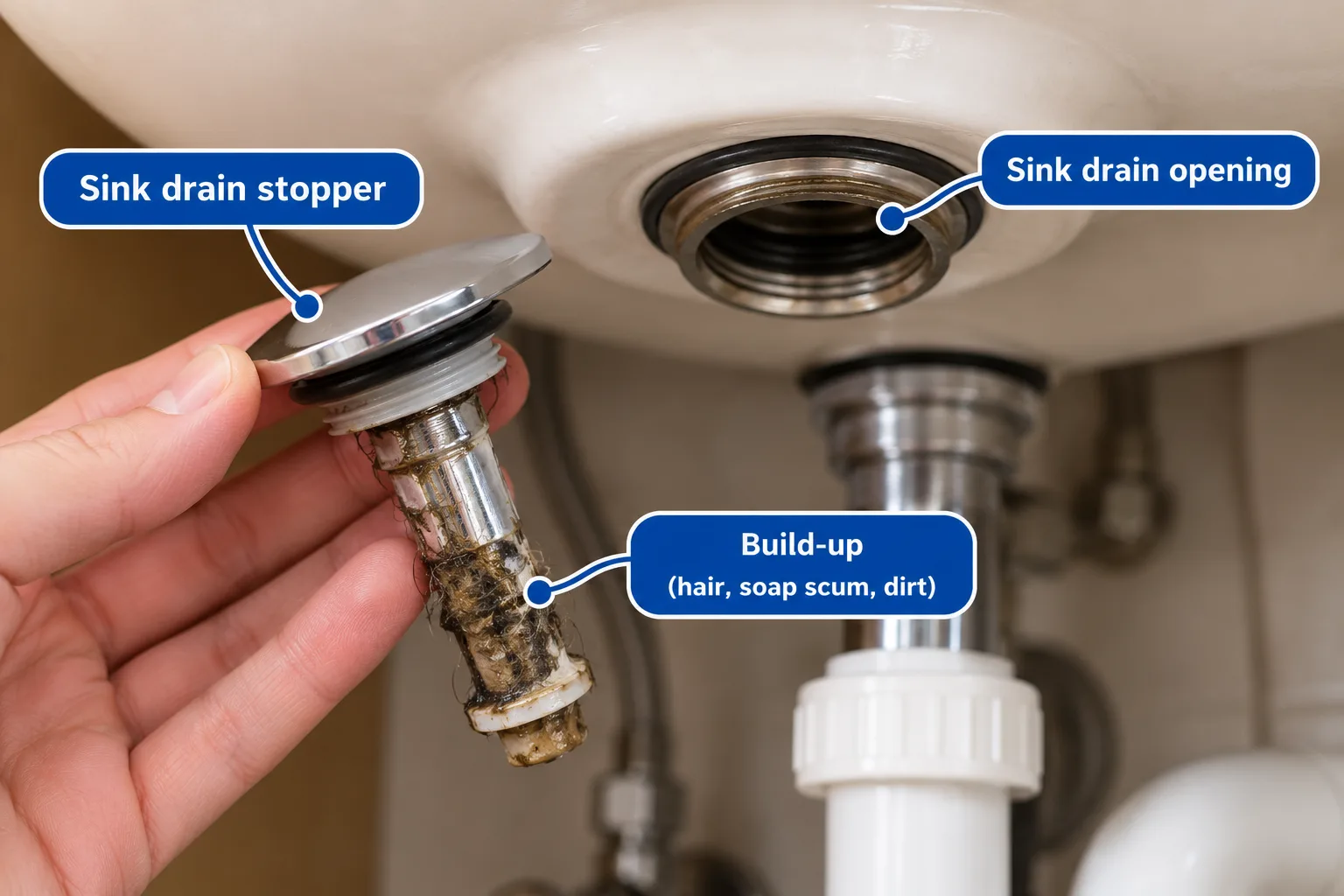
Take the stopper out and pour in a jug of water. If it drains fast, the stopper was the problem. Hair and soap wrap around the stem underneath it.
Still slow? Clean the pipe under the sink. You only need a bowl and a spanner.
Still slow after that? The blockage is further down, inside the wall. That needs a plumber.
Don't fancy taking the pipes apart? Download the gigit app and post a plumbing task. It takes about 2 minutes, and verified 5-star plumbers near you will send you offers.
2. Cleaning a stopper that sticks or won't open
The stopper is the metal cap you press to open and close the plughole. When it won't open, or only lifts a little, grime on its stem is usually stopping the spring from pushing it up.
Push stopper (press to open, press to close): here's how to remove a push stopper. Press it so it pops up, then twist the cap anticlockwise by hand. If it's stuck shut, grip it with a dry cloth. Don't lever it with a screwdriver, because chrome scratches easily.
Pull-rod stopper (a small rod behind the tap): look under the sink for a thin metal rod going sideways into the pipe. Loosen the nut holding it, slide the rod out, and the stopper lifts free.
Rinse the gunk off the stem and put it back. If it still sticks after a clean, the spring is worn and a plumber can fit a new stopper.
If the sink smells, check the overflow too. That's the small hole near the top of the sink that stops it spilling over. Grime collects inside it, and a small bottle brush will clean it out.
3. Cleaning the pipe under the sink
If water is still slow with the stopper out, you have a blocked sink pipe. The blockage is almost always in the U-shaped bend under the sink, which plumbers call the trap or sink P-trap. It holds a little water to stop drain smells coming up, and it's also where hair and bits settle. Some sinks have a bottle trap instead: a straight cylinder with a cup that unscrews at the bottom.
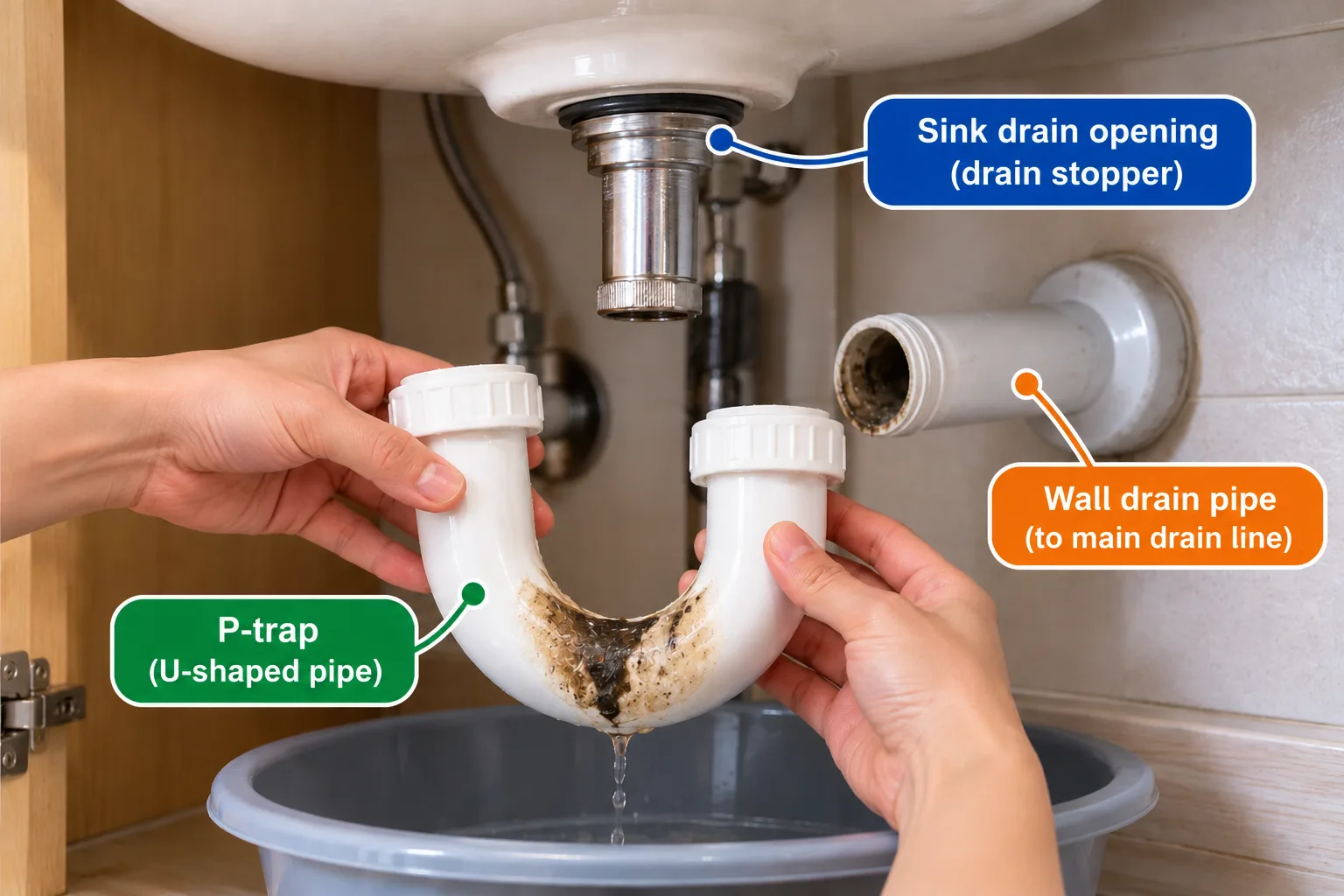
Put a bowl under the pipe. Then turn off the small water valve under the sink, so nobody can run the tap while the pipe is off. Bathroom brand TOTO recommends this step too.
Unscrew the two joints on the pipe under the sink by hand, or with an adjustable spanner if they're tight. On a bottle trap, just unscrew the cup at the bottom.
Empty it into the bowl and clean out the gunk. Check the rubber rings sit flat.
Screw it back together, wrapping any metal threads in plumber's tape first. Run the tap for a minute and check for drips.
4. When it's blocked inside the wall
If the sink is still slow with a clean pipe, or it keeps blocking every few weeks, the blockage is in the pipe inside the wall. You can't reach it by hand. A plumber will:
feed a drain snake (a long, flexible steel cable) into the wall pipe and clear it
check the pipe slopes down properly, because a pipe that runs almost flat keeps blocking
replace any worn stopper, pipe or rubber rings, then run the water to check for leaks
To get it sorted, post a plumbing task on gigit, set a budget or leave it open to offers, and choose from the offers local gigit heroes send. You pay through gigit's Safe Payment System, backed by Kasikorn Bank. A plumber can reach the blockage you can't, so you end up with a sink that drains properly again and with no drips underneath.